

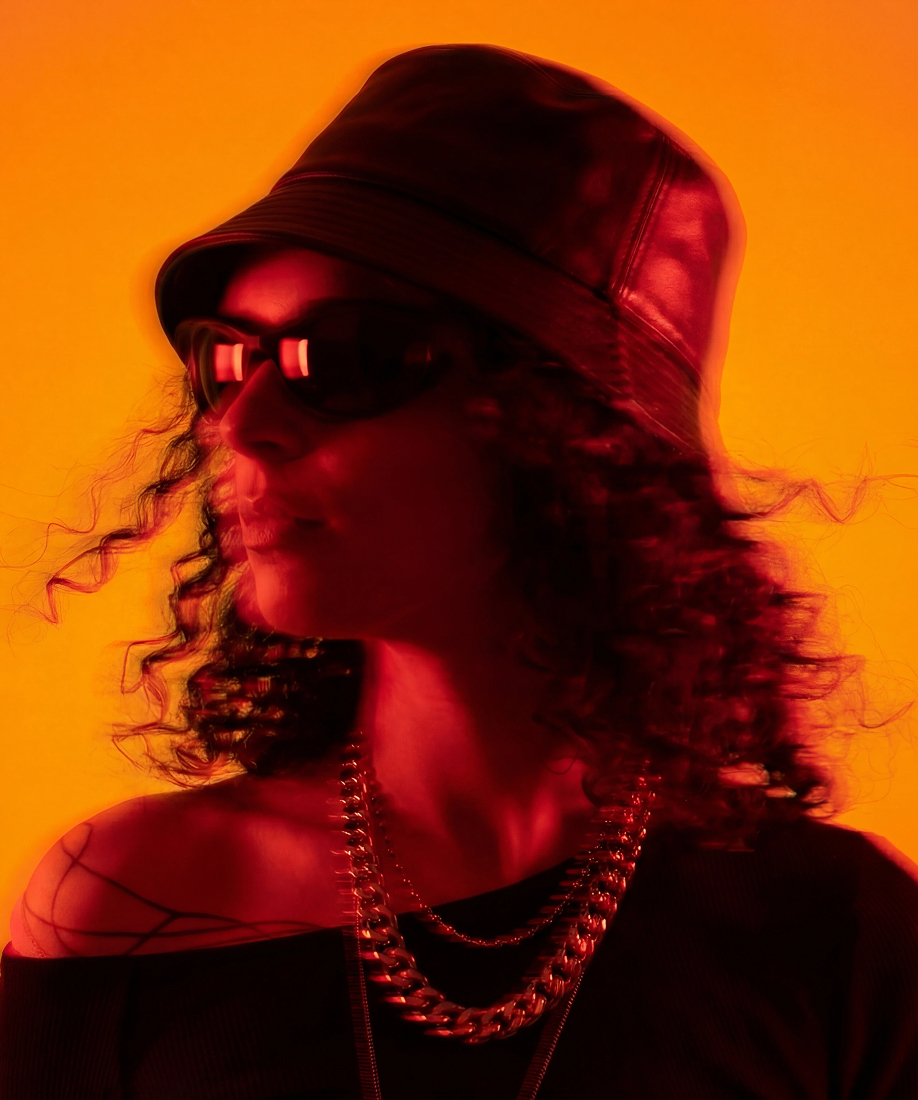
"I didn't want it to be all bangers. Life isn't all bangers."
The Turkish-Italian DJ and producer on her debut album, sentimentality as a strategy, and why she's tired of the algorithm.
By the time Carla Frayman — known to the dancefloor as Carlita — picks up the phone from her apartment in New York, she has just come off a run of shows that took her through Tulum, São Paulo, and a private gig in the south of France she politely won't name. She's tired, but the kind of tired she likes. "It's the only thing that proves you're actually doing something," she says, laughing. "Otherwise you start to feel like a tourist in your own life."
That life, for the last three years, has been a particular kind of blur: festival cycles, Senza Fine — her travelling party-and-fragrance-and-clothing project — and the slow, occasionally agonising assembly of Sentimental, her debut album for Ninja Tune's Counter Records imprint, released in late 2024.
She is still processing it. "I was genuinely scared," she admits. "Most people know me from the club. They come to a Senza Fine night expecting a certain energy. And I made a record that has cellos on it. There are quiet songs. There are songs that you couldn't really play in a peak-time set even if you tried."
That was, she insists, the point.
"I grew up playing classical cello. I was in rock bands as a teenager in Istanbul. The DJ thing came later, and I love it, but it's one room in the house. I wanted to open up the rest of the house." She pauses. "I didn't want it to be all bangers. Life isn't all bangers."
The conversation moves, as conversations with Carlita tend to, between the structural and the spiritual. She talks about working with SG Lewis on the lead single "The Moment" — a session that started over dinner in Los Angeles and ended with a vocal take she says she barely touched. She talks about DJ Tennis, her longtime mentor and Astra Club collaborator, who appears on the opener "Trouble Symphony." She talks about the Sicilian musician Orofino, whose voice on "Comme Ça Voce" finally pulled the Italian side of her family out of the shadows of the record.
"My mother spoke Portuguese, my father is Turkish, my grandparents on one side are from Italy. I grew up listening to about six different musical traditions before lunch every day. For a long time I thought I had to pick. With this album I stopped picking."
She is direct about the limits of what's possible right now in dance music. "I think we're at a strange point. There's so much stuff being made — too much. And a lot of it sounds the same because everyone is using the same plug-ins, the same loops, sometimes the same AI tools. I'm not against any of it, but I do feel like, if you go to a club and you can't tell who's playing — what's the point of being there? The DJ is supposed to be a person."
She wants, next year, to play with a live orchestra. "It's the dream. I keep talking about it and people keep saying yes, in the polite way that people say yes. So I'm going to make it happen by being annoying about it."
What does the next chapter look like? She doesn't trade in five-year plans. "I want the year to be a bit better than this one. That's it. More remixes. More tracks. Some live shows with the album band — I want to take Sentimental somewhere it can actually breathe, where it isn't fighting the BPM of a festival." She is starting, slowly, on a second record. She won't say more than that.
The last thing she tells me, before she has to leave for the studio, is about her audience. "People are smarter than the industry gives them credit for. If you give them something honest, even if it's strange, even if it's slower than what they expected — they'll come with you. That's what I've learned. That's the whole thing."